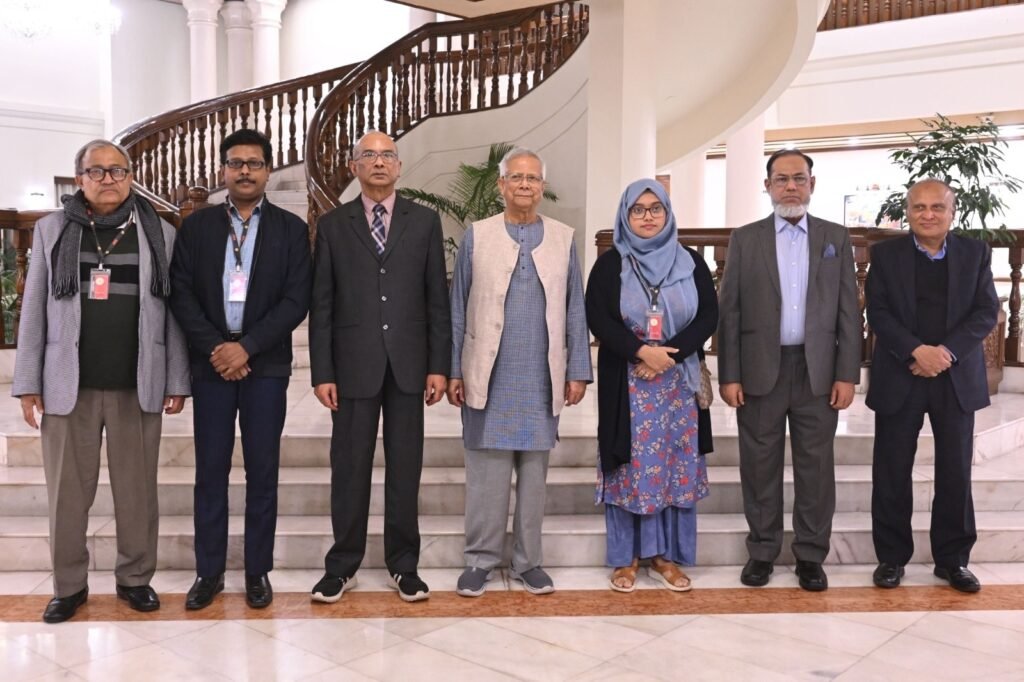
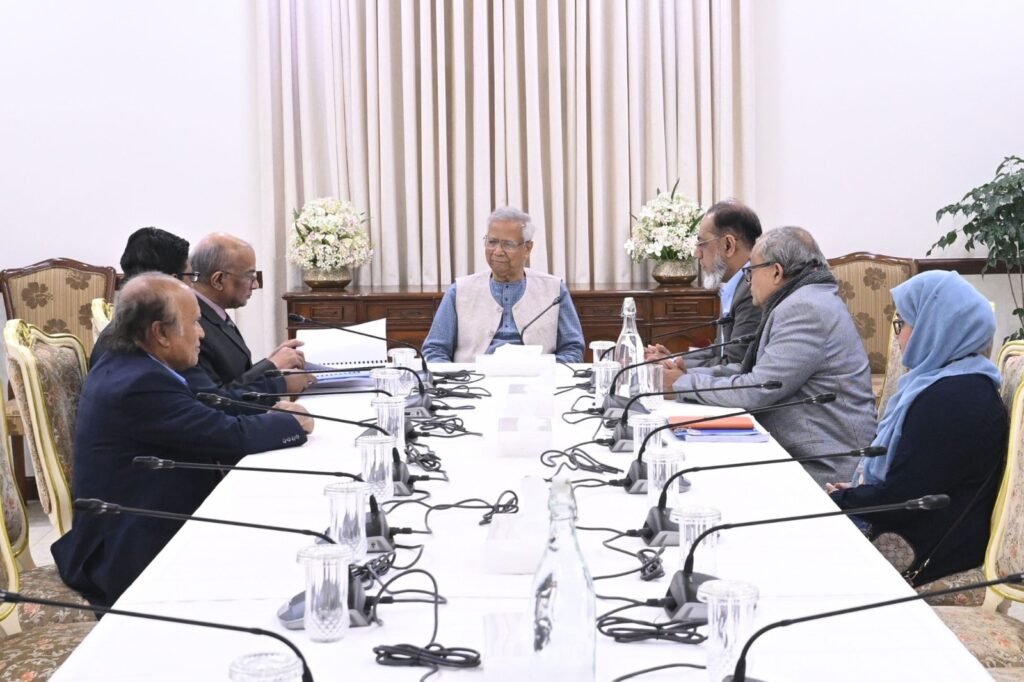
Dhaka, 5 January 2026 – The Commission of Inquiry on Enforced Disappearances has concluded that enforced disappearances in Bangladesh were primarily driven by political motives, according to its final report submitted on Sunday to Chief Adviser Muhammad Yunus. The report was formally handed over in the afternoon at the state guest house Jamuna. Those present included Commission Chair Justice Mainul Islam Chowdhury, members Justice Md Farid Ahmed Shibli, Nur Khan Liton, Nabila Idris, and Sajjad Hossain. Adviser Adilur Rahman Khan and Principal Secretary to the Chief Adviser Sirajuddin Mia were also in attendance. According to the commission, a total of 1,913 complaints were submitted. After verification, 1,569 cases met the legal definition of enforced disappearance, including 287 cases classified as “missing and deceased.” Commission member Nabila Idris said complaints are still being received and estimated the total number of enforced disappearances could range between 4,000 and 6,000. She noted that many victims or their families either remain unaware of the commission, have relocated abroad, or are unwilling to speak on record due to fear. The commission stated that its data clearly establishes enforced disappearances as politically motivated crimes. Among those who later returned alive, 75 percent were affiliated with Jamaat-e-Islami and Islami Chhatra Shibir, while 22 percent were leaders or activists of the BNP and its affiliated organizations. Among those still missing, 68 percent were BNP-affiliated and 22 percent Jamaat-Shibir members. The report further claims evidence of direct involvement by former Prime Minister Sheikh Hasina, her former defence affairs adviser Major General (retd.) Tarique Ahmed Siddique, and former Home Minister Asaduzzaman Khan in several high-profile disappearance cases. Notable victims cited include BNP leader Ilias Ali, Hummam Quader Chowdhury, Salahuddin Ahmed, Chowdhury Alam, Jamaat leader and former Brigadier General Abdullahil Aman Azmi, Barrister Mir Ahmed Bin Qasem, and former diplomat Maruf Zaman. Commission members said the former prime minister personally issued directives in multiple disappearance cases. Evidence of rendition to India without legal process, the report noted, further indicates authorization from the highest levels of the state. Commending the commission’s work, Chief Adviser Professor Yunus described the report as historic. “On behalf of the nation, I thank the commission. What you have documented can only be described as monstrous,” he said, adding that the investigation required extraordinary resolve. He stated that the report documents how democratic institutions were dismantled to justify extreme brutality, warning that society must ensure such atrocities never recur. He directed the commission to present recommendations and future action plans, and called for the findings to be communicated to the public in accessible language. The Chief Adviser also instructed authorities to map all sites linked to extrajudicial killings and disposal of bodies, alongside detention facilities such as Aynaghar. According to the commission, investigations show the Baleshwar River in Barishal was the most frequently used site for dumping bodies, with additional evidence found in the Buriganga River and parts of Munshiganj. Commission members thanked Professor Yunus for his support, saying the investigation would not have been possible without his firm stance. They also urged the government to reconstitute the National Human Rights Commission and ensure long-term protection and justice for victims and their families.