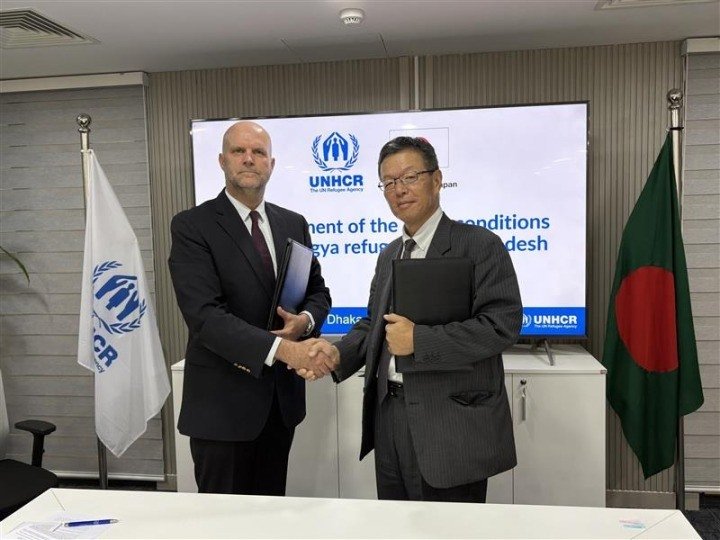
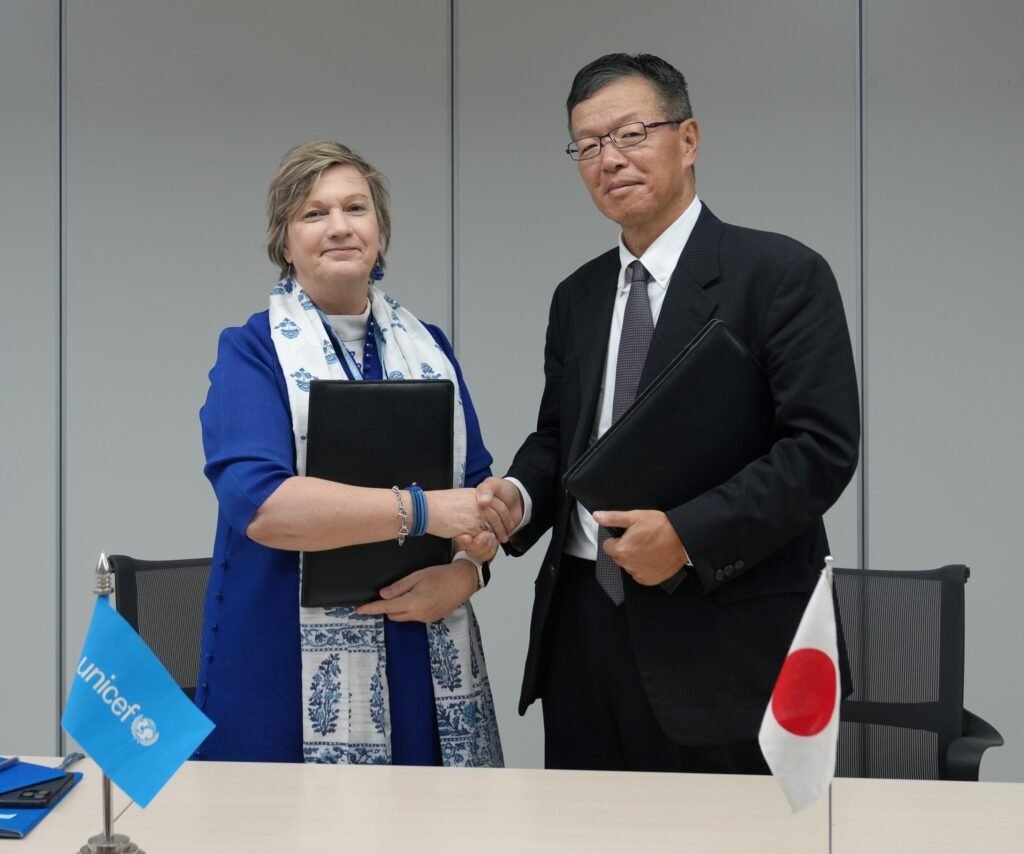
Dhaka, 12 March 2026 – The Government of Japan has pledged JPY 2.57 billion (USD 16.5 million) in new grant assistance to support Rohingya refugees and host communities in Bangladesh through five projects implemented by UN agencies. The assistance package was formalized in Dhaka between 2 and 5 March 2026 through partnerships with UNICEF, UNFPA, International Organization for Migration, World Food Programme and UNHCR. The projects aim to sustain life-saving services and strengthen resilience for Rohingya refugees and Bangladeshi host communities living in Cox’s Bazar and Bhasan Char, where nearly 1.2 million Rohingya refugees continue to live under challenging conditions. Under the new package, Japan will provide USD 1.4 million to UNICEF to support children’s health, education, water, sanitation and nutrition services; USD 3.2 million to UNFPA for sexual and reproductive health services, gender-based violence response and support for adolescents; and USD 2.6 million to IOM to improve living conditions through shelter, healthcare, LPG distribution, site management and livelihoods support. In addition, USD 6.7 million will go to WFP for food assistance and nutrition services for refugees while supporting the resilience of host community farmers, and USD 2.6 million to UNHCR to provide shelter repair materials, primary healthcare and clean cooking sets for Rohingya refugees. Japanese Ambassador to Bangladesh SAIDA Shinichi said Japan remains firmly committed to supporting Rohingya refugees and the Bangladeshi communities hosting them. “Through these five new partnerships with UN agencies, Japan is delivering timely and practical support to protect lives, dignity and resilience,” he said, expressing hope that the assistance would help sustain essential services at a time of growing humanitarian needs and shrinking global resources. Since the beginning of the Rohingya emergency in August 2017, Japan has been among the most consistent supporters of the humanitarian response in Bangladesh, contributing over USD 250 million to UN agencies and non-governmental organizations working on the crisis. Japan also reaffirmed its commitment to continue working closely with the Government of Bangladesh, UN agencies and international partners to support affected populations and contribute to a sustainable solution to the Rohingya crisis.